 Business License

Trichloroisocyanuric Acid Production Wastewater Treatment: Processes and Technologies
Abstract
This paper delves into the characteristics of wastewater generated from Trichloroisocyanuric Acid (abbreviated as TCCA thereinafter) production and outlines the treatment processes involved in reprocessing this industrial effluent, focusing on the application of advanced technologies like Mechanical Vapor Recompression (MVR) evaporator.
Introduction
TCCA is a new generation of high efficient broad-spectrum fungicides, bleaching agents and anti-shrinkage agents. It is mainly used for disinfection and sterilization of drinking water, industrial circulating water, swimming pool, silkworm room, restaurant, hotel, public place, family and hospital. It has superior bactericidal ability to similar product like sodium hypochlorite, and is the upgrading product of bleaching agent and bleaching concentrate presently.
TCCA production yields substantial wastewater, necessitating comprehensive treatment due to its chemical composition exceeding permissible discharge limits. The integration of advanced treatment methods is vital for sustainability and environmental compliance.
Characteristics of TCCA Wastewater
The primary components of the TCCA wastewater include TCCA~1.0%, sodium chloride ~10%, and free chlorine ~0.4%, pH ~4.0, with concentrations posing challenges for direct discharge compliance. The integration of advanced treatment methods is vital for sustainability and environmental compliance.
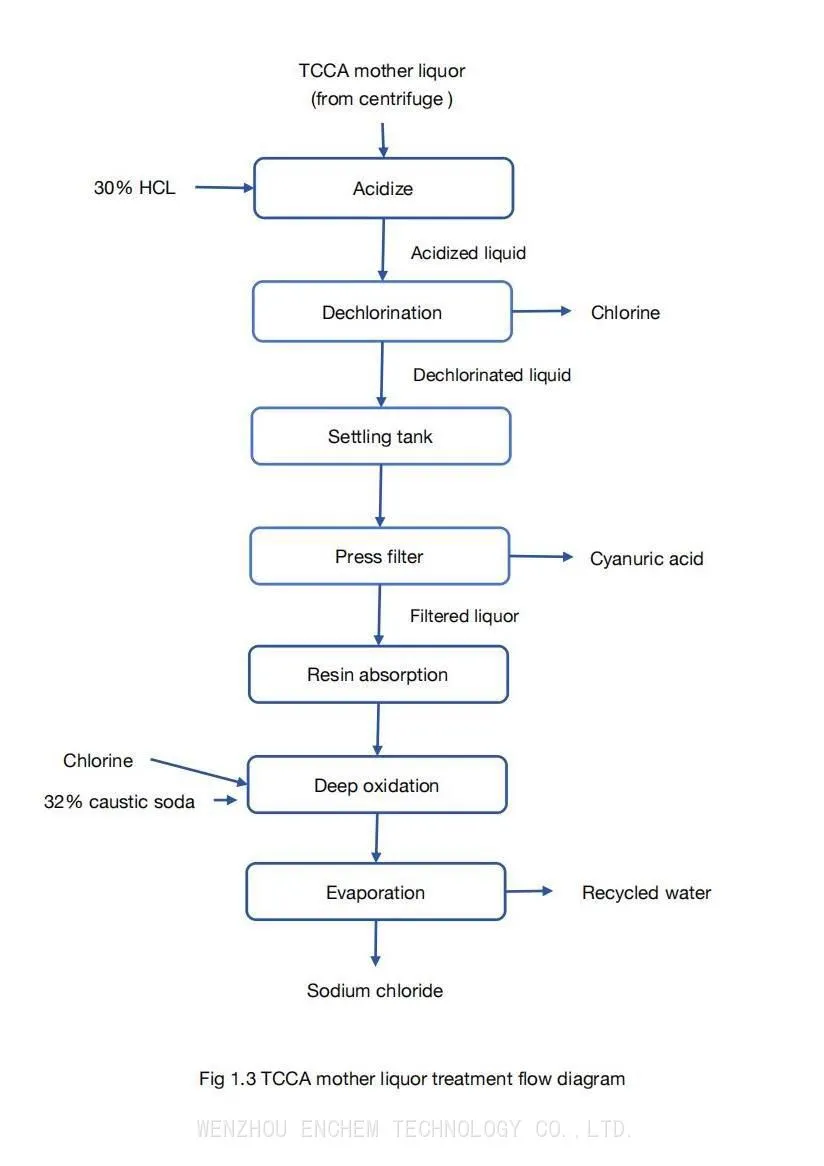
The treatment process for TCCA wastewater generally consists of four steps: acid hydrolysis, cyanuric acid recovery, resin adsorption, deep oxidation, and evaporation concentration.
1 Acidize: A crucial step where trichloroisocyanuric acid is broken down into cyanuric acid and chlorine gas through the reaction with hydrochloric acid.
2 Cyanuric Acid Recovery: After acidizing, the recovery process involves settling and filtration to isolate cyanuric acid.
3 Resin Adsorption: Further treatment involves resin adsorption to eliminate dissolved cyanuric acid from the wastewater.
4 Deep Oxidation: Utilizing caustic soda and chlorine gas, sodium hypochlorite formed aids in the removal of residual cyanuric acid.
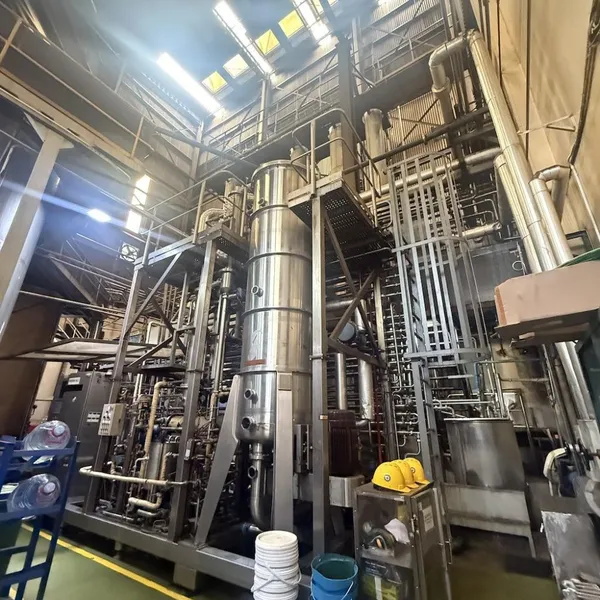
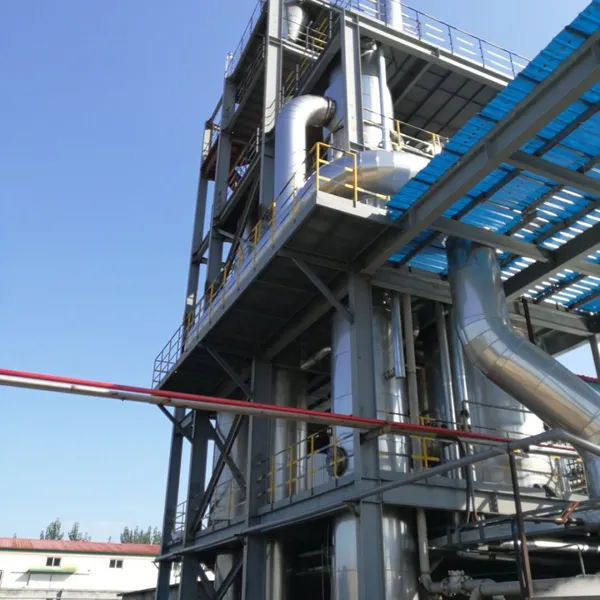
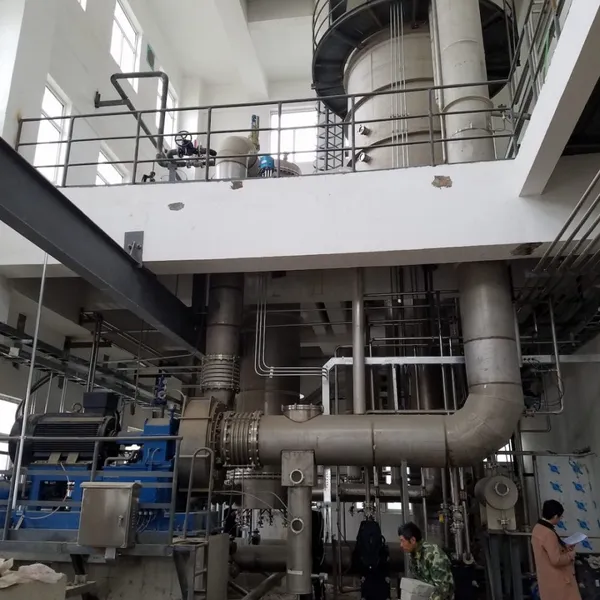
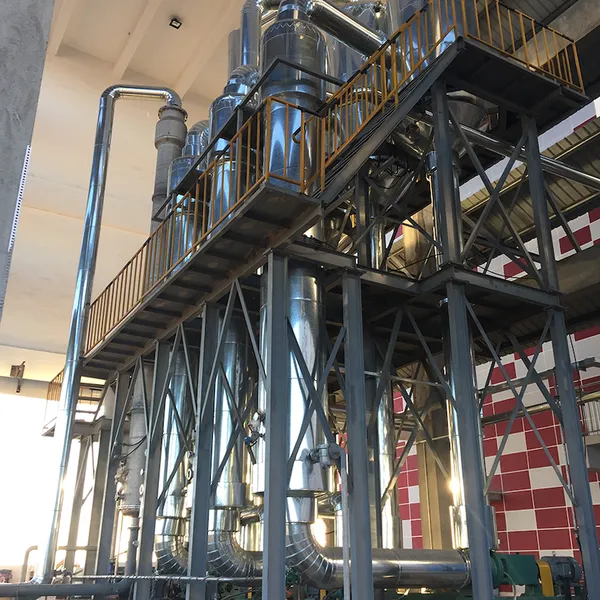
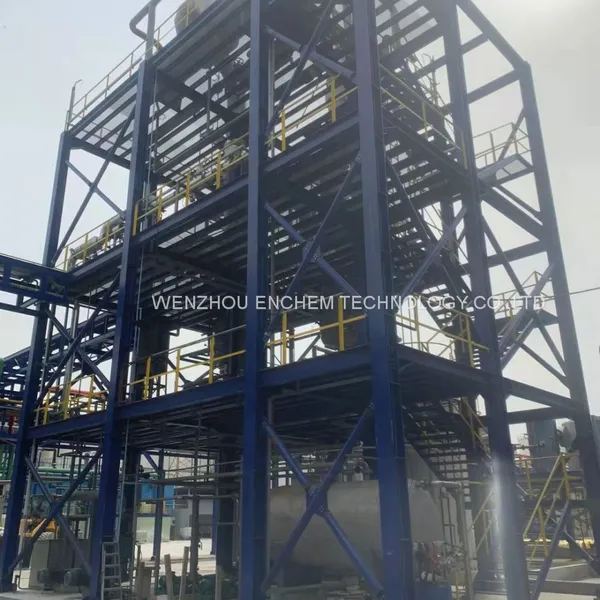
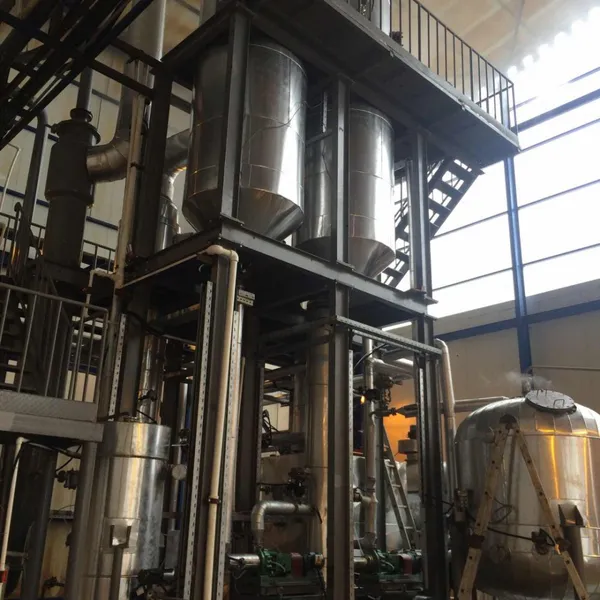
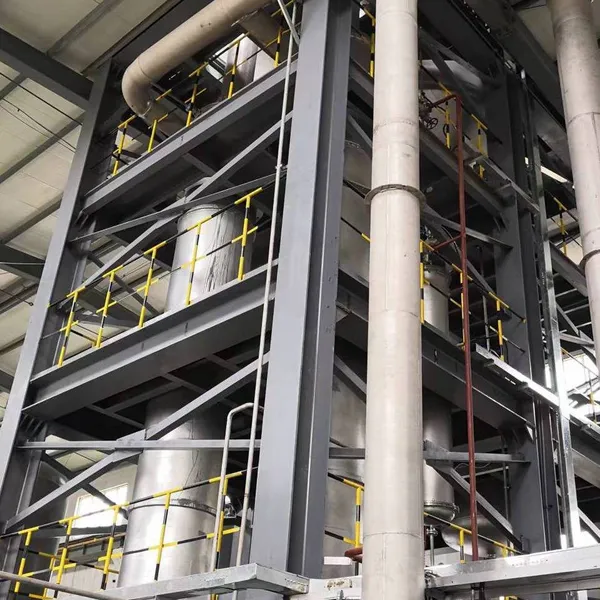
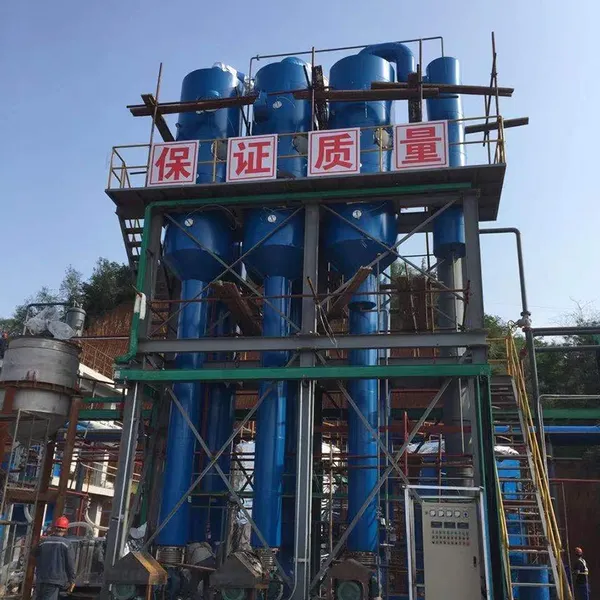
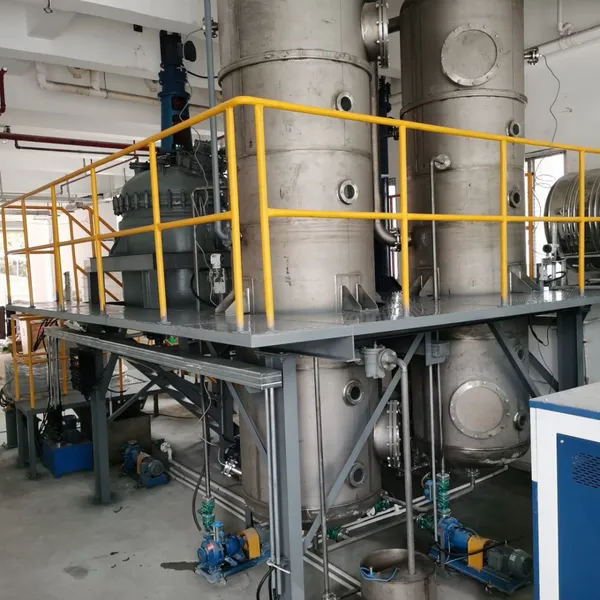
5 Evaporation Concentration: After the aforementioned steps, the cyanuric acid content in the wastewater is significantly reduced, with the main component being sodium chloride at a concentration of 80 to 120 g/L. This can be concentrated through evaporation to the desired level for reuse, such as in the chlor-alkali industry’s electrolysis units, or for separating out solid sodium chloride for water recovery. Depending on the site conditions, a multi-effect evaporator or MVR evaporator can be selected at this stage.
MVR Evaporator
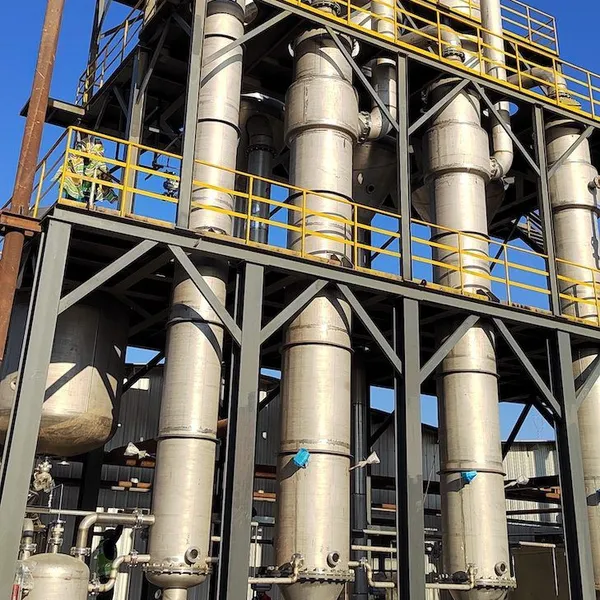
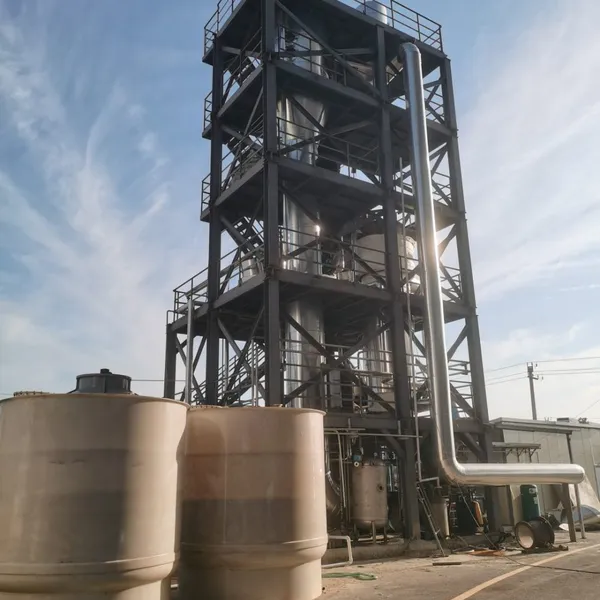
MVR (Mechanical Vapor Recompression) evaporator utilizes secondary steam generated by the evaporator. The steam is compressed by a mechanical vapor compressor, increasing pressure, temperature, and enthalpy, and then sent to the heating chamber of the evaporator for use as heating steam.
Characteristics of MVR Evaporator:
1. Little external steam supply is required during normal operation, it solely relies on the recompression of the secondary steam by mechanical compression to maintain evaporation.
2. No need for a condensation system: cooling water is not required to condense the secondary steam.
3. Capable of achieving low-temperature evaporation, suitable for concentrating heat-sensitive materials.
4. Low energy consumption, reducing the need for external heating and cooling resources.
Using the MVR process to treat wastewater produced in chemical production effectively separates salt and water, enabling the reuse of recovered water and reducing the overall water consumption.
Recently Posted
-
Can MVR Evaporators Be Used for Calcium Chloride Concentration?
September 3, 2026Calcium Chloride Evaporation & Concentration SystemsCalcium chloride (CaCl₂) is widely used in industrial applications and is Read More
 -
MVR vs TVR: Efficiency, Cost, and Application Guide
September 2, 2026In the industrial evaporation field, energy-saving technologies have become critical for reducing operational costs and minimizing
Read More -
Successful Commissioning of the Potassium-Sodium Separation Four-Effect Evaporator
September 2, 2026OverviewWe are delighted to announce the successful commissioning of the Potassium–Sodium Separation Four-Effect Evaporator System
Read More -
OSLO Crystallizer – Efficient Fluidized Bed Design for Large Crystal Growth
September 2, 2026OverviewIn industrial crystallization processes, crystallizers are commonly classified according to their circulation mechanism an
Read More

Contact Us
Recommended Products
-
 Titanium Triple-effect Evaporator for Lithium Battery RecycleNegotiableMOQ: 1 Set
 -
Four-effect Falling Film Evaporator for Coffee Extract ConcentrationNegotiableMOQ: 1 Set
-
MVR Evaporator for Dyeing Wastewater TreatmentNegotiableMOQ: 1 Set
-
MVR Evaporator for Landfill Leachate TreatmentNegotiableMOQ: 1 Set
-
Triple-effect Forced Circulation Evaporator for Cobaltous Sulfate RecoveryNegotiableMOQ: 1 Set
-
Double-effect Countercurrent and Falling Film Evaporator for Caustic Soda ConcentrationNegotiableMOQ: 1 Plant
-
Double-effect Forced Circulation Evaporator for Calcium Chloride ConcentrationNegotiableMOQ: 1 Set
-
MVR Evaporator for Smelting Wastewater TreatmentNegotiableMOQ: 1 Set
-
Triple-effect Forced Circulation Evaporator for High Salinity Wastewater TreatmentNegotiableMOQ: 1 Set
-
Double-effect Central Circulation Evaporator for Metallurgy Effluent TreatmentNegotiableMOQ: 1 Set
-
Triple-effect Forced Circulation Evaporator for Mix Salt Wastewater TreatmentNegotiableMOQ: 1 Set
-
MVR Evaporator for Bio-pharmaceutical Wastewater TreatmentNegotiableMOQ: 1 Set
-
Calcium Chloride Solution Preparation and Refining PlantNegotiableMOQ: 1 Set
-
Vacuum Decompression Concentrator (Tank)NegotiableMOQ: 1 Set
-
Ammonium Sulfate Crystalline Powder Evaporation and Drying PlantNegotiableMOQ: 1 Set